


Immigrants’ Rights
Immigrants in the United States have certain rights and legal protections regardless of their immigration status. Protections include the rights to due process, equal protection under the law, and freedom from unlawful searches.
Crimes Committed Against Immigrants
Violations of Rights Guaranteed to Everyone based on the U.S. Constitution
Non-citizens on U.S. soil have constitutional rights. The 4th, 5th, 10th, and 14th Amendments are foundational to U.S. law and they were violated in the actions of ICE agents in roundups, incarcerations and arrests without due process, and in illegal deportation to other countries.
ICE actions violated these amendments:
- The 4th protects against unreasonable searches and seizures.
- The 5th guarantees protections for individuals in legal proceedings.
- The 10th reserves powers not granted to the federal government to the states or people.
- The 14th guarantees citizenship, due process, and equal protection under the law.
ICE and Border Patrol are violating the rights of both non-citizens and of U.S. citizens, the rights of those who are native-born and those who are naturalized, meaning those who follow the residency requirements and pass a test to become legal citizens of the US.
Crimes that Violate International Human Rights Law
Federal agents have committed at least four international human rights crimes in immigration actions across the US.
- Ethnic cleansing: the expulsion of a population from a given territory using force and intimidation to render an area ethnically homogeneous. The acts comprising it – forcible transfer, murder, and persecution – are illegal under international law, specified as crimes against humanity or genocide in the Rome Statute of the International Criminal Court and in the UN Genocide Convention.
- Disappearances: The UN Convention for the Protection from Enforced Disappearance defines enforced disappearanceas “the arrest, detention, abduction, or any other form of deprivation of liberty by agents of the State or by persons acting with the authorization of the State, followed by a refusal to acknowledge the deprivation of liberty or by concealing the fate or whereabouts of the disappeared person.” The Convention states that no exceptional circumstances whatsoever, not even war or any other public emergency, justifies enforced disappearance.
- Refoulement:The third international crime is refoulement, the forcible sending or return of refugees or asylum-seekers to a country where they may face persecution. Refoulement is rooted in UN Conventions on Refugees of 1951, 1954, and 1961.
- Mandela Rules: The UN Standard Minimum Rules for the Treatment of Prisoners, or the Nelson Mandela Rules, establish minimum standards for humane treatment, including protections against torture, limits on solitary confinement, equal access to healthcare, and independent inspections of prisons.
Although the US has not ratified some of these international treaties, the issues are obligatory under international customary law, which applies to all countries without the process of treaty ratification. Therefore, in these situations, the US violates either customary international law, a specific treaty, or both.
Legislation and Litigation in U.S. States
Several states are pursuing laws to enable people to sue federal agents for civil rights abuses during immigration crackdowns. Ten states – California, Maine, Massachusetts, Maryland, Massachusetts, Connecticut, Vermont, New Jersey, New York, and Illinois – have passed ‘civil rights protection acts’ to hold federal officers accountable.
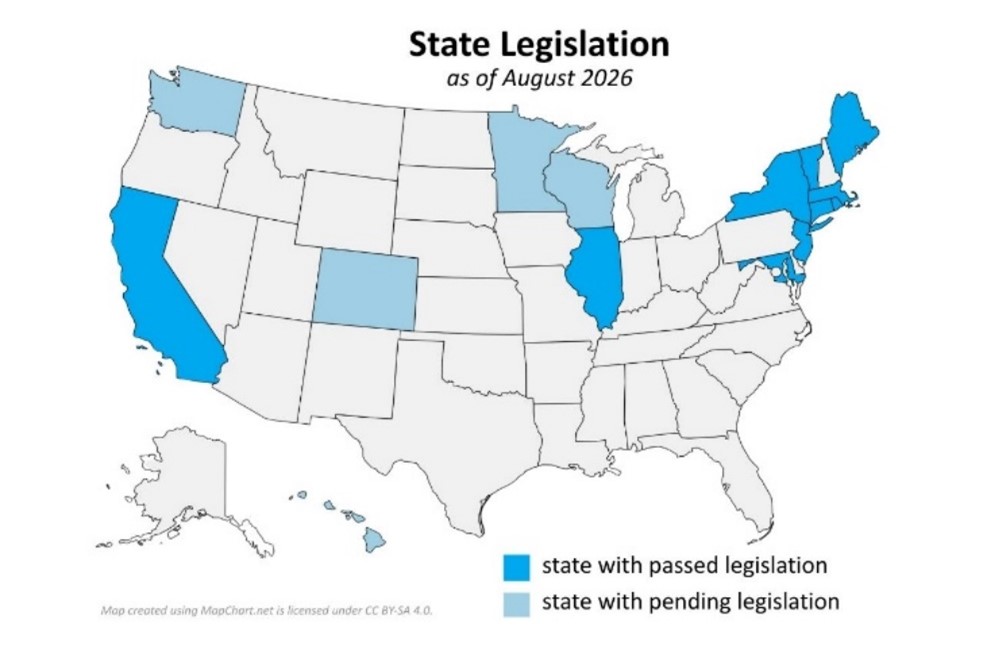
Federal agents’ impunity allows and encourages more wrongdoing by the federal government, makes our constitutional protections meaningless, and destroys our faith in the federal justice system and in the rule of law, making all of our communities more unsafe.
It is increasingly important for states to act against the federal destruction of constitutional guarantees.
Learn More
- Read more about the Minnesota Constitutional Remedies Act.
- Download a fact sheet about the Constitutional Remedies Acts.
- Download a fact sheet about anti-immigrant actions by the federal government.
In the News
- “They fled torture in their home countries. Now they’ve been held by ICE.,” Minnesota Star Tribune, 2-2-2026, by John Rash
- “‘Denaturalization’ undermines human rights, and our humanity,” Pioneer Press, 8-1-2026, by Ellen J. Kennedy, Ph.D.
- “From ‘neighboring’ to justice: Operation Metro Surge,” MinnPost, 7-6-2026, by Ellen J. Kennedy, Ph.D.
- “Minnesota stands up to ICE raids by ‘neighboring,’“ Duluth News Tribune, 7-19-2026, by Colleen Feige and Ellen J. Kennedy, Ph.D.
Immigration Detention Centers
The United States operates the largest detention system in the world. Immigration detention is the practice of incarcerating immigrants while they await a determination of their immigration status or potential deportation. In Fiscal Year 2025, the U.S. government detained more than 310,000 people in a system of over 200 detention centers, jails, and prisons across the country run by Immigration and Customs Enforcement (ICE) (Detention Watch Network).
Congress gave ICE $45 billion for detention expansion last year.
ICE has a record of abuse. People in ICE detention are deprived of their liberty, denied access to lawyers, separated from their families and loved ones, and it is documented that they are subjected to severe medical neglect and abuse (Health Affairs, May 27, 2026).
Physicians reporting in Health Affairs cite failures of medical care in immigration detention that constitute clear violations of international human rights standards. The United States is a party to, and therefore is bound by, both the International Covenant on Civil and Political Rights and the Convention Against Torture, which prohibit cruel, inhuman, or degrading treatment. The United Nations Standard Minimum Rules for the Treatment of Prisoners – known as the Mandela Rules – further require that detained persons receive health care equivalent to that available in the community.
The physicians state that persons in immigration detention
“die from treatable chronic illnesses, develop preventable infectious diseases due to poorly managed outbreaks, or are denied timely emergency medical care. Routinely holding individuals in solitary confinement for longer than 15 days also violates the Mandela Rules and meets the UN’s definition of torture. Recent reporting about the widespread use of force in ICE detention also raises significant concerns about standards violations.”
Persons currently held in immigration detention centers are both legal and undocumented immigrants who are being denied rights that are guaranteed to all residents in the US, regardless of citizenship status.
A tragic consequence that receives little attention is the impact on the children whose parents are detained. A Brookings study (May 18, 2026) estimates that 145,000 U.S. citizen children have likely experienced a parent booked into detention since the current administration began in January 2025, with more than 22,000 of those children experiencing detention of all their co-resident parents. It must also be noted that not only immigrants are incarcerated in detention centers; some citizens have also been detained.
States must demand oversight and accountability of facilities within their boundaries.
Anti-Immigrant Actions by the Federal Government (as of August 2026)
1. Arrest goal: 2,000 persons per day.
ICE booked 43,138 people into detention in June 2026.
51,000 arrests were made in July 2026. This total of 91,138 is less than the 122,000 goal for June and July. 70.6% of those arrested have no criminal convictions. Of those with convictions, they include even minor traffic violations.
ICE will equip agents with gloves that administer electric shocks to enhance compliance during confrontations, at a taxpayer cost of $20 million.
2. How arrests are carried out.
There are 24 ICE field offices across the country. ICE (Immigration and Customs Enforcement) and BCP (Border and Customs Patrol) agents arrest as follows:
- At worksites.
- At airports, detaining persons boarding domestic flights with expired visas, many legally waiting for ‘next step’ green card processing. Detentions include people married to U.S. citizens.
- In public spaces, building lobbies, and workplaces, targeting individuals with at-large arrests in places where a judicial warrant is not legally required under federal rules.
- With local law enforcement officers through expanded 287(g) agreements, in which deputized local officers assist with federal immigration enforcement. As of July 31, 2026, ICE has agreements with 2,179 agencies in 39 states. As of July 31, 2026, law enforcement agencies in at least 9 Minnesota counties have signed 287(g) agreements. The Minnesota ACLU has filed lawsuits against these counties for entering into agreements without county board permission.
- ICE Alternatives to Detention (ATD) programs are currently monitoring 183,181 families and single individuals as of July 11, 2026 for potential arrest.
- Two people were murdered by ICE agents in arrest actions in July 2026:
Lorenzo Salgado Araujo, July 7, 2026: A 52-year-old Mexican national and father of three was fatally shot in Houston, Texas. Johan Sebastian Duran Guerrero, July 13, 2026: A 23-year-old Colombian man was fatally shot in Biddeford, Maine. Investigations determined that neither victim was an ICE target.
3. Detention information: numbers, conditions, and deaths.
- There are 456 immigration detention facilities across all 50 states and territories. These profit-making, privately-run enterprises have no government oversight. Conditions are documented to be unsafe, unsanitary, abusive, and with inadequate medical care and nutrition. “You’re only getting out deported or dead,” reports Human Rights Watch. Detention site costs to taxpayers: $11 billion annually.
- The first ICE detention facility in Minnesota is set to open in Appleton, a small town 160 miles west of Minneapolis. At 1,600 beds, the CoreCivic facility would be among the state’s largest carceral facilities. Its scale and remoteness threaten the ability of detained people to access legal counsel and protection.
- As of early August 2026, ICE was holding 68,000-73,000 people in detention across the US, record-high levels. On an average day, there are 225 children in detention, at least 25 of them ages 3 or under.
- As of August 4, 2026, at least 24 people have died in ICE custody this year. This includes Edwin Lopez-Cornejo, a 41-year-old from El Salvador, on August 1 at the Delaney Hall detention center, New Jersey.
- Reports document that as many as 10 immigrant detainees on hunger strikes in 2026 have beenforce-fed through nasogastric tubes.
4. Other strategies:
- Renewed attacks on birthright citizenship in two executive orders, August 6, 2026, to limit those who can qualify. Birthright citizenship is guaranteed by the 14th Amendment to the U.S. Constitution. It was upheld by the U.S. Supreme Court on June 30, 2026, but the federal government continues to seek limitations.
- On Dec. 24, 2025, the U.S. government directed U.S. Citizenship and Immigration Services (USCIS) to supply the Department of Justice (DOJ) with 100-200 denaturalization cases per month for 2026, up to 2,400 cases this year. This is a dramatic increase from 120 cases filed in the 9-year period, 2017-2025. DOJ has created a specialized “Denaturalization Section” to pursue these cases.
- Naturalization decline. Instead of limiting approvals for naturalization to a specific number, the administration has implemented hurdles to reduce applications and to increase denials, including higher denial and lower processing rates, stricter tests and higher fees, and subjective criteria for “assimilation” and “character.”
- Withdrawal of TPS (Temporary Protected Status). At least 700,000 people, including 1,600 Minnesotans Karen from Burma/Myanmar and Somalis), have been stripped of TPS as the administration terminates 13 of 17 active country designations. They will be deported. TPS cancellation from the other 4 countries is pending.
Total estimated taxpayer cost of the immigration actions: $270 billion over this administration’s term.15
Updated August 2026.